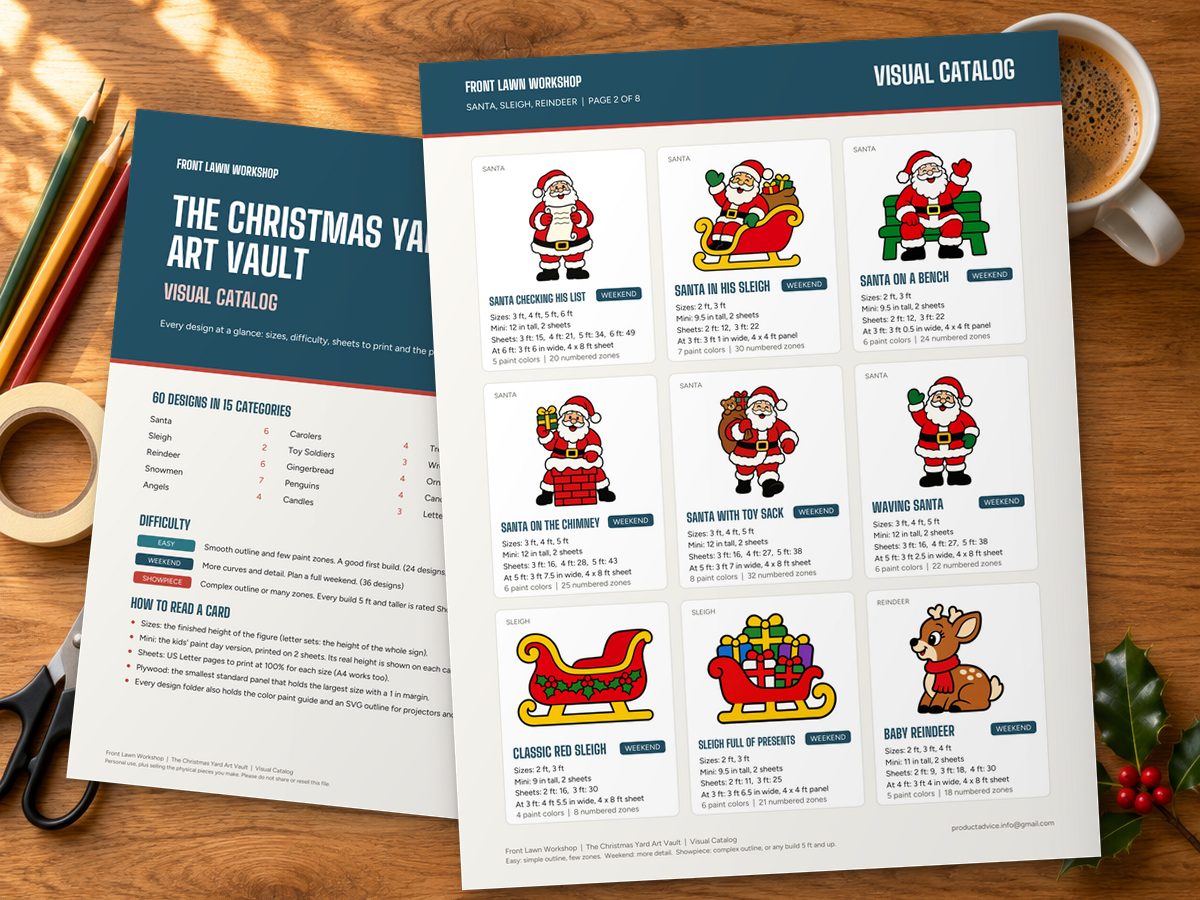
Friday after supper, you open the Visual Catalog on the tablet and pick the Penguin in Scarf at 2 ft. Easy rating, 8 sheets, 4 paint colors, fits a 2 x 4 ft panel. You print page 1, lay your ruler on the scale square and it reads exactly 2 inches. You print the rest.
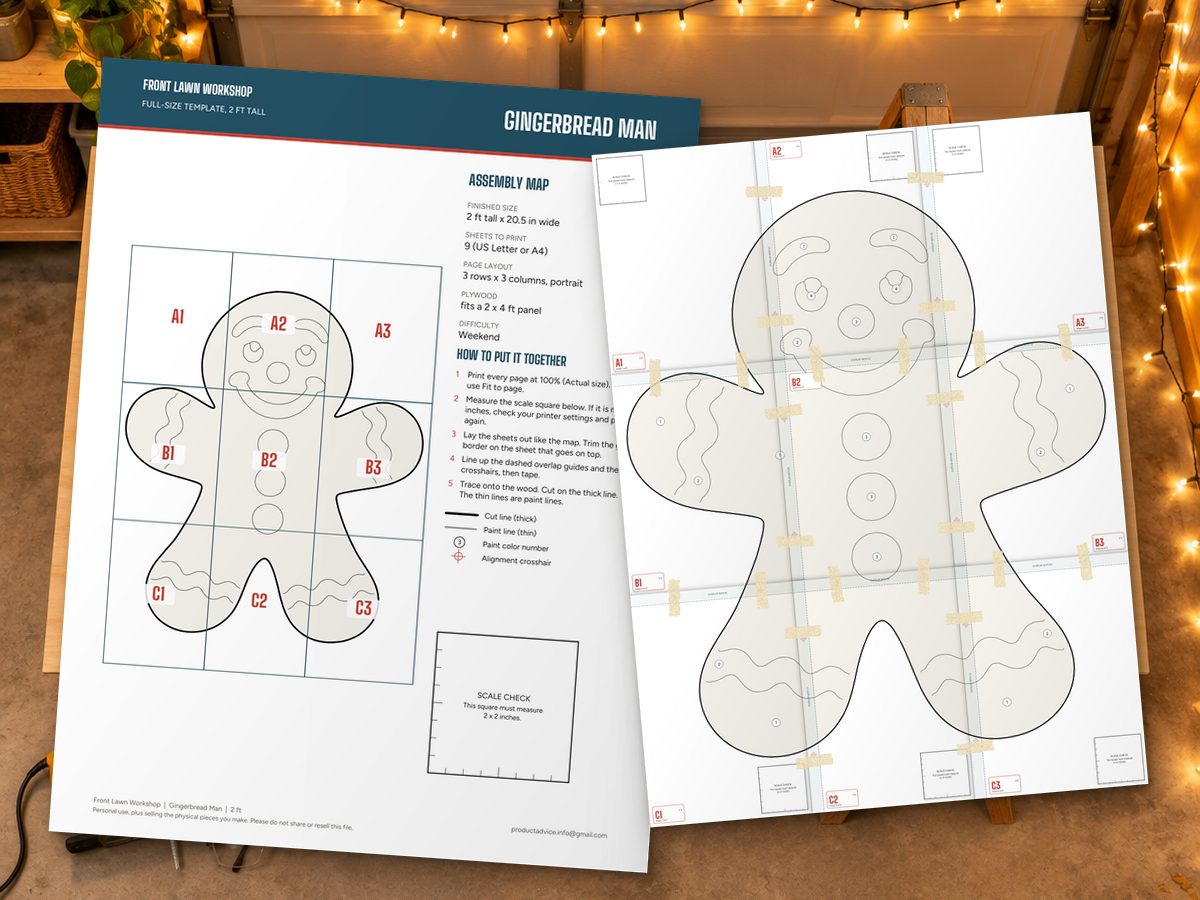
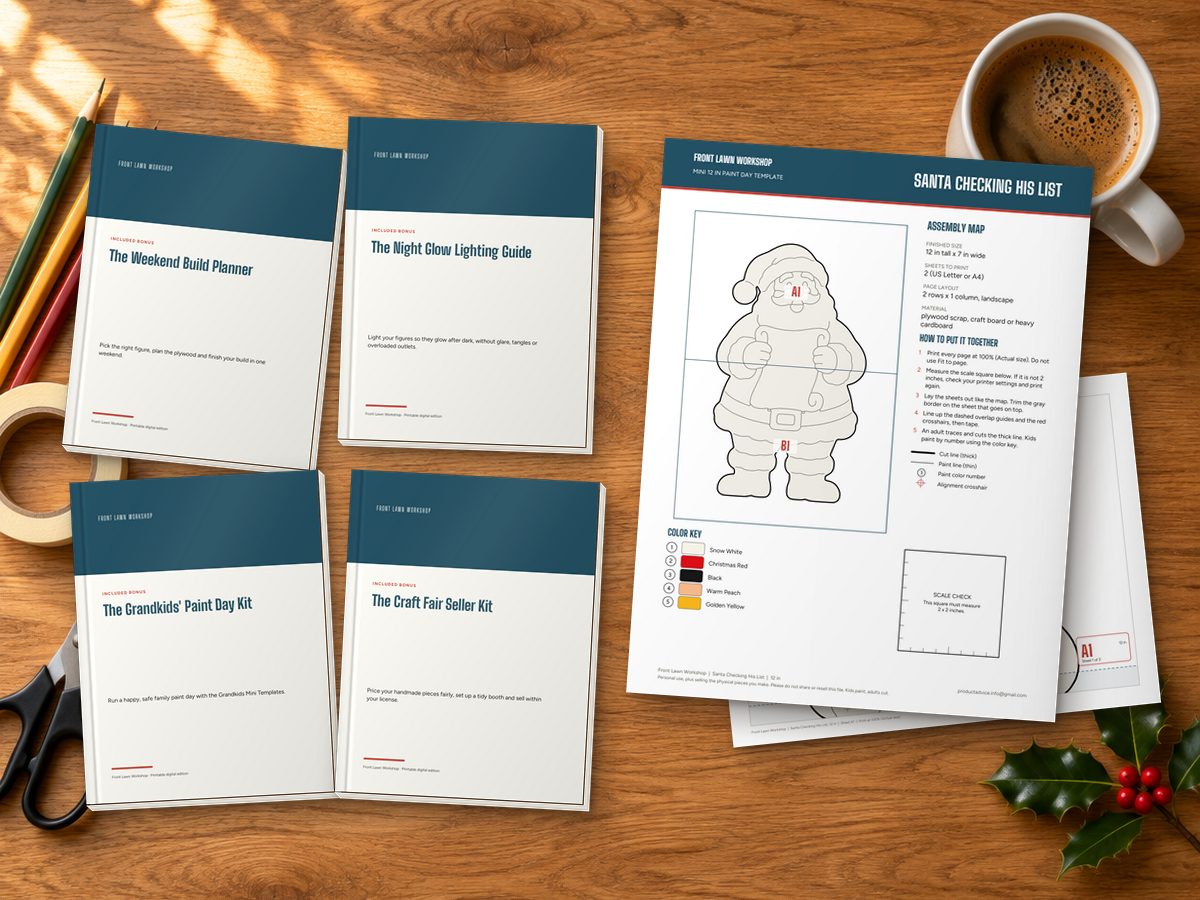
On the kitchen table you lay the sheets out like the assembly map shows. A1 next to A2, B1 under A1. You trim the margin off the top sheet, line up the red crosshairs, and tape. Twenty minutes later there is a full-size penguin on the table, and you did not draw a line.
You hinge the pattern to the plywood with tape, slide graphite paper underneath and trace: the thick outline firmly, the thin paint lines lightly. You write the color numbers inside each zone in pencil. It is not even nine o'clock.
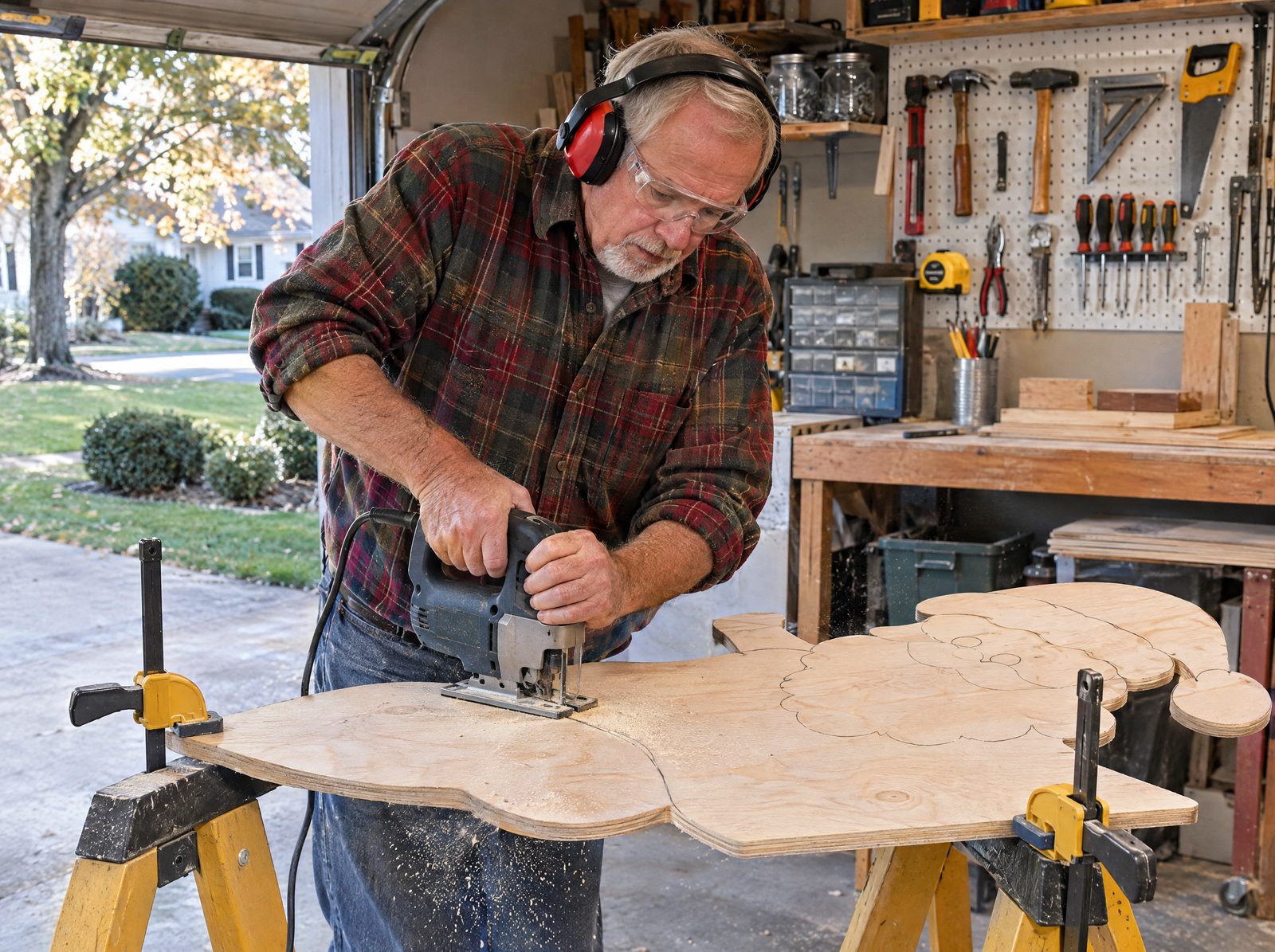
Saturday morning you clamp the panel to the sawhorses, put on your safety glasses and earmuffs, and cut. There are no holes to cut inside the figure, just the outline, with a few relief cuts on the tight curves. After lunch you sand the edges, fill a void or two and brush two heavy coats of primer onto every edge.
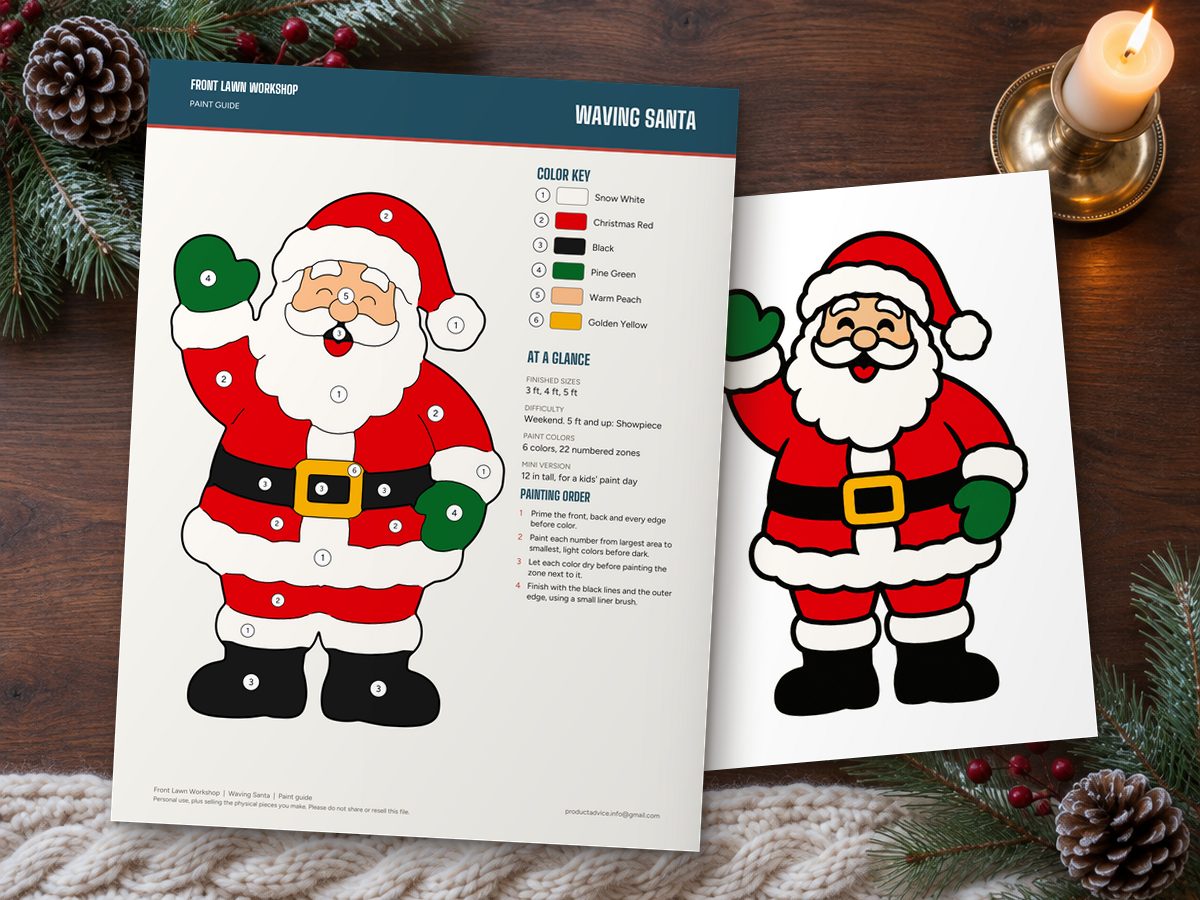
Sunday is paint day. Your spouse takes the brush, the paint guide goes up on the garage wall, and the numbers do the rest: 1 is Snow White, 2 is Christmas Red, 3 is Black. Light colors first, dark colors last, then the black outline that makes the figure pop from the street.
By late afternoon the penguin is dry enough to handle. You screw two conduit straps to the back, slide it over two pieces of rebar in the front bed (after the 811 marks are in), and set a spotlight a few feet in front. At dusk you walk out to the sidewalk and look back. That is when you start picking the next one.